How to Catch a Queen Ant (and When)
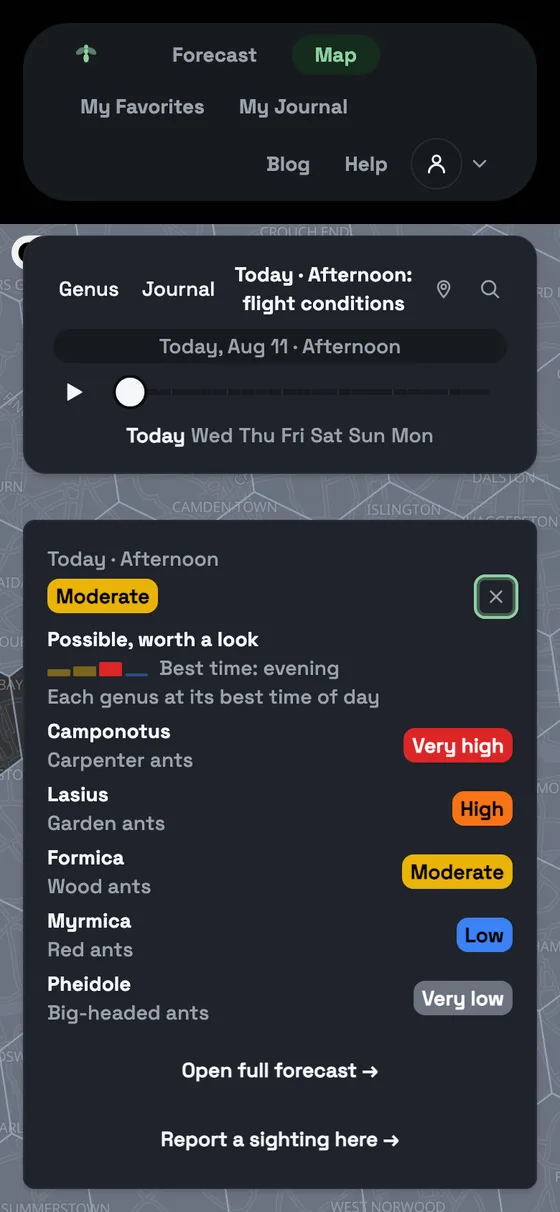
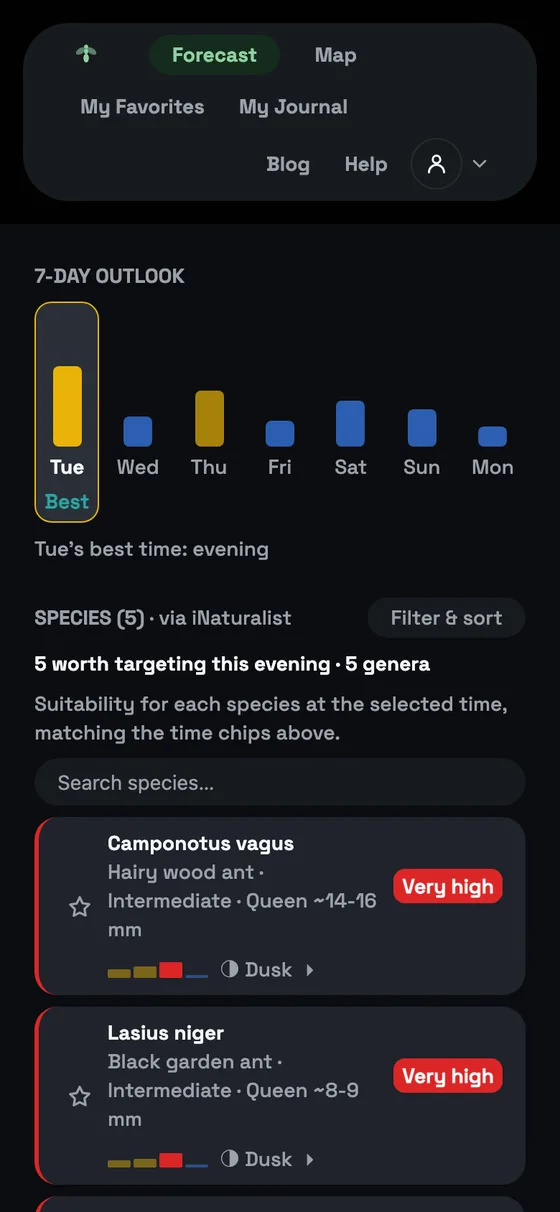
The trick to catching a queen is being outside just after a nuptial flight, when newly mated queens have landed, shed their wings, and are walking the ground looking for a nest site. You catch them by hand, no trap needed. The hard part is timing: knowing which day, and which hour, the flight happens. A reason to look up, not a guarantee.
What you are actually looking for
A new queen leaves her colony with wings, mates in the air, then lands and breaks her own wings off before she starts walking. So the ant you want is noticeably larger than a worker, often with a bare wing scar on her back, wandering across open ground in the hours after a flight. Night-flying species come to lights, so a queen circling a porch lamp is the same opportunity in the dark.
The method, step by step
1. Go out on the right day
Queens fly on warm, humid, calm days, usually a day or two after rain. Those are the days worth being outside for; a cool, windy, dry afternoon is almost always a waste of a walk.
2. Be out at the right hour
The hour varies by species: some fly in the first light of morning, some around midday, some at dusk, and carpenter ants fly after dark and gather at porch lights. Match your search to the species you are after.
3. Look where queens land
Scan open pavement, patios, driveways, and the base of sunlit walls, where a walking queen stands out against a flat surface. After dark, check under and around outdoor lights.
4. Collect her gently
Coax her into a small test tube or container rather than pinching her. She can give a mild nip, but she is not dangerous and does not need to be handled roughly.
5. Keep her calm and dark
Give a founding queen a little moisture, keep her somewhere dark, warm, and undisturbed, and resist checking on her constantly. Most fully-claustral queens need no food while they raise their first workers.
How we forecast it (and what we don't promise)
Dealate reads live weather against species-specific thresholds grounded in published research, and every sighting logged in the app builds toward a public accuracy track record over time. We report odds, not promises: a reason to look up, not a guarantee. Read the full methodology →
Frequently asked questions
When is the best time to catch queen ants?
Just after a nuptial flight, when newly mated queens have landed and are walking the ground. Flights happen on warm, humid, calm days, usually after rain, at an hour that depends on the species. Getting the day and hour right is most of the battle.
Where do you find queen ants?
On open, flat surfaces after a flight: pavements, patios, driveways, and the base of sunny walls. Species that fly at night come to outdoor lights, so lit porches and car parks are worth a look after dark.
Do you need a trap to catch a queen ant?
No. There is no reliable bait or trap for queens; you catch them by hand or by coaxing them into a tube after they land. That is why timing matters so much, since the whole method depends on being outside during the short window after a flight.
How do you keep a queen ant you caught?
Put her in a test tube setup with a water reservoir behind cotton, keep her dark, warm, and undisturbed, and leave her be while she raises her first brood. A fully-claustral queen does not need feeding until the first workers appear.
Why did I not find any queens?
Almost always the day or the hour was wrong, not the technique. A high-odds day can still pass quietly, since biology has variance. A reason to look up, not a guarantee.