When Is Flying Ant Day 2026? A UK Forecast, Species by Species
"Flying Ant Day" is the popular name for the UK's summer nuptial flights, when winged queen and male ants leave their nests together to mate in the air. Expect the main UK swarms roughly 7–25 July 2026, peaking on the first hot, humid, still days after rain. It isn't a single national day. It's a likelihood window, a reason to look up, not a guarantee.
Why "Flying Ant Day" is a myth
Each species flies in its own narrow band of temperature, humidity, wind, and pressure, across a rolling window of days and weeks, not one date. Dealate forecasts species by species instead of collapsing them into one made-up day.
What actually triggers a nuptial flight
The weather recipe is warmth, high humidity, calm air, and often a spell after rain. Dealate scores today's live weather against thresholds grounded in published research for each species. Read the full methodology →
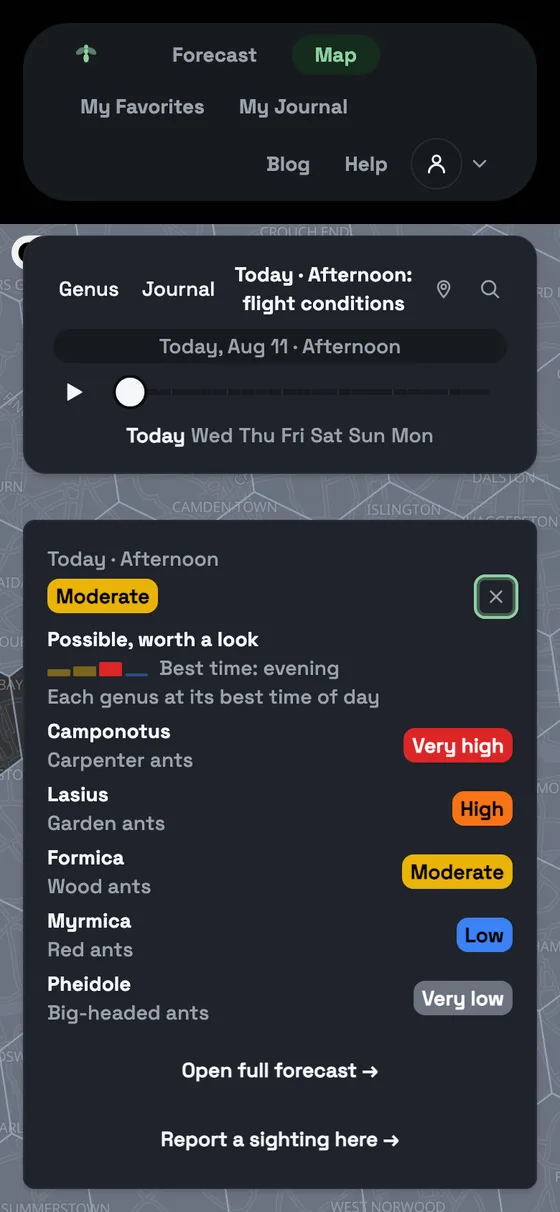
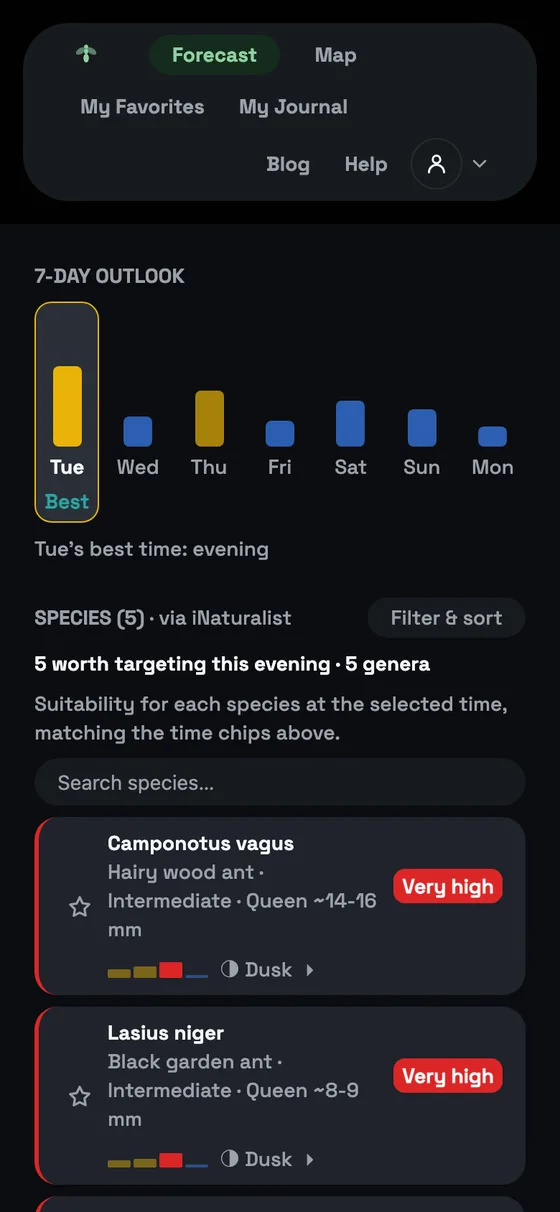
Flying Ant Day by region (2026)
Every UK town shares the same rough window (7–25 July, peaking on the first hot, still, humid day after rain), but the exact day shifts locally with each town's own temperature, rainfall, and humidity, from London, Manchester, Birmingham, Bristol, Leeds, Newcastle, Glasgow, Southampton, and everywhere between. A reason to look up, not a guarantee.
Shutdown detailsWhat to do when the ants swarm
Watch: it's over in a few hours. Log a sighting in the app if you spot one; it's citizen science that helps sharpen the forecast. If they're indoors, they're harmless and gone by evening, so there's no need to panic or reach for pest control.
How we forecast it (and what we don't promise)
Dealate reads live weather against species-specific thresholds grounded in published research, and every sighting logged in the app builds toward a public accuracy track record over time. We report odds, not promises: a reason to look up, not a guarantee. Read the full methodology →
Frequently asked questions
When is Flying Ant Day 2026 in the UK?
The main UK swarms are expected roughly 7–25 July 2026, peaking on the first hot, humid, still days after rain. There's no single fixed date; it depends on species and local weather, so Dealate forecasts the odds day by day rather than naming one.
Is Flying Ant Day the same day everywhere?
No. Different regions warm up on different schedules and different ant species fly under different conditions, so a swarm in Southampton rarely lands on the same day as one in Newcastle. Dealate forecasts each UK town separately for this reason.
What weather causes flying ants?
Nuptial flights are triggered by warmth, high humidity, and calm air, and often follow rain that has softened the ground. Each species responds to a slightly different combination of these thresholds, which is part of why a single "Flying Ant Day" is a myth.
How long does Flying Ant Day last?
Any single flight lasts a few hours, not a day, but the wider UK season runs about three weeks, roughly 7–25 July, as different colonies and species reach their own conditions across that window.
Why do ants only fly on certain days?
A colony gets one shot at its nuptial flight each year, so it waits for conditions that maximise a young queen's chance of surviving and starting a nest: warm, humid, low-wind weather, usually after rain. Fly in the wrong conditions and the flight risks failing.
Are flying ants dangerous?
No. Flying ants are the same common garden ants seen every day, just with wings for a few hours during their mating flight. They can bite or give a mild sting if handled, but they aren't aggressive and pose no more risk than the ants already in your garden.
How accurate is a flying ant forecast?
A flying ant forecast is a likelihood score, not a promise. Dealate scores each species' odds from weather thresholds grounded in published research, and every sighting logged in the app helps build toward a public accuracy track record over time. Biology has variance, so a high-odds day can still pass quietly. A reason to look up, not a guarantee.
For reporters
For a story we can offer day-by-day peak predictions for your readers' cities this week, real product screenshots, and a named spokesperson for quotes, available same-day when the swarms hit.
Press contact: Dean Hart, founder, Dealate (Calibrated Intelligence, Inc.)