Monomorium ants (Monomorium subopacum)
Monomorium subopacum · Monomorium
Monomorium ants (Monomorium subopacum). Recorded flying in two windows: January through March and December. Dark brown to black head, dark brown to black mesosoma, black gaster. Winged alate, darker overall than the amber-brown monomorphic workers. Recorded near 1 of the 198 locations Dealate tracks.
When do Monomorium ants fly?
Recorded flying in two windows: January through March and December.
Flight calendar
Jan
Feb
Mar
Apr
May
Jun
Jul
Aug
Sep
Oct
Nov
Dec
An estimate for this genus in this region, not species-specific published research.
Queen appearance
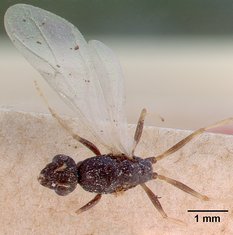
Dark brown to black head, dark brown to black mesosoma, black gaster. Winged alate, darker overall than the amber-brown monomorphic workers.
fast, jerky, erratic movement typical of small Monomorium foragers
How to catch a queen ant →Founding care
Fully claustral: seal her in a test tube setup, somewhere dark and undisturbed. She raises the first brood on her own wing muscles and needs no food or opening until the first workers appear.
Diet: Omnivorous (sugar water, honey, insects, meat, seeds nuts etc.)
Beginner · Queen ~4-6 mm
Read more on AntWiki →Care data from antkeeping.info (CC BY 4.0).
Habitat
Soil · also under stones · typical for this genus
After a flight, watch bare or grassy ground for wingless queens. Scan stony ground, paths and kerbs for searching queens.
More Monomorium species
Monomorium ants (Monomorium carbonarium)Monomorium ants (Monomorium ergatogyna)Monomorium ants (Monomorium floricola)Monomorium ants (Monomorium minimum)See Monomorium ants where you live
Dealate scores the day's best window, a rolling 7-day outlook, and a live forecast map for whichever species fly near you. Every recurring plan starts with a 7-day free trial.
Start a 7-day free trial →